
ownAI’s Michael Zimmer Joins Northwestern Panel on Leading AI with Purpose
At ownAI, we believe that AI isn’t about replacing people—it’s about empowering them. That belief was front and center at Northwestern University’s recent webinar, AI Revolution in the Workplace: Challenges, Opportunities, & Applications, where our partner Michael Zimmer joined a panel of experts to explore how AI is reshaping how we work, learn, and lead.
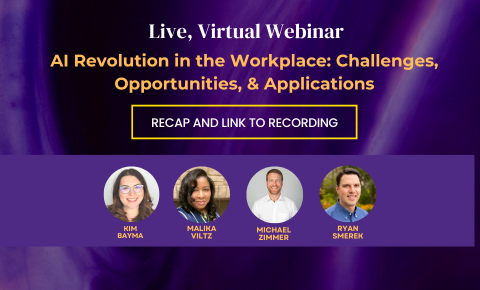
Click on this image to see the recording!
Hosted by the MSLOC (Master of Science in Learning & Organizational Change) program, the event brought together a diverse group of thought leaders to discuss the evolving relationship between AI and organizational change. The conversation underscored a theme we hear often in our work with mission-driven and employee-owned firms: AI is only as powerful as the culture that surrounds it.
From Garbage In, Garbage Out—to Strategic Insight
Panelist Kim Bayma offered a critical reminder: the effectiveness of AI depends on the quality of the data it’s built on. “Garbage in, garbage out,” she noted—highlighting that without intentional data practices, even the most advanced AI tools can miss the mark.
At ownAI, we see this as one part of a larger readiness equation. High-quality data is essential—but so is a culture that understands how to apply insights from that data, aligned to real business goals. The most successful organizations don’t just invest in the tech—they invest in their people, their processes, and their purpose. That’s where transformation begins.
Human-Centered Change Starts with Culture
Dr. Malika Viltz-Emerson brought forward a powerful reminder: real intelligence must guide artificial intelligence. AI strategy, she said, should always be grounded in human needs and ethical considerations. It’s a perspective that echoes our culture-first philosophy at ownAI: the future of AI belongs to organizations that prioritize purpose, equity, and learning.
Michael Zimmer on Ownership and Organizational Readiness
Michael addressed a challenge that many leaders face today: the readiness gap. While individual employees are exploring AI tools on their own, most organizations haven’t built the systems to support responsible, strategic adoption.
“Organizations need to harness the expertise of the people who already know their industry inside and out,” Michael said. “In employee-owned firms especially, where incentives are aligned, AI has the potential to become a truly empowering force.”
This alignment between ownership mindset and technological enablement is a major opportunity. Employee-owners aren’t just users of AI—they can be leaders in shaping how it drives better decisions, deeper collaboration, and stronger results.
Practical Use Cases, Real Impact
The panelists shared examples that are already transforming workplaces: sales coaching bots, adaptive learning experiences, and conversational AI agents that help teams collaborate more effectively. But as Michael emphasized, these innovations only create value when they’re supported by thoughtful implementation, clear use cases, and engaged teams.
From Insight to Action
The panel made one thing clear: AI won’t drive impact on its own. It takes intentional design, strategic alignment, and a culture that empowers people to lead the change.
That’s where ownAI comes in.
We partner with employee-owned and mission-driven organizations to turn curiosity about AI into confident, capable adoption—focused on real-world performance, not hype. Our approach combines hands-on learning, practical use cases, and leadership alignment to help teams build internal fluency and lasting impact.
Ready to explore how AI can empower your team? Schedule a time with us—we’d love to connect.